
Legacy
A Craftsman's Legacy
In February 2025, Mr. Kazumi Akada — the inventor of the hair-tip processing technique at the heart of this brush — passed away peacefully of old age.
Born and raised in Kyoto, Japan, he studied mechanical engineering at Kyoto University before taking over his family's brush manufacturing business.
At one point, he was approached by Kaneka Corporation, a Japanese materials company. It had developed Kanegoat, a modacrylic synthetic fiber designed to resemble the texture of natural goat hair. But this synthetic fiber had one unresolved challenge. Natural hair tapers naturally to a fine point at the tip, while synthetic fibers, being cut at some stage of production, could not reproduce that same tapered tip. This was the problem Kaneka Corporation faced.
With materials like nylon or PBT, it's possible to taper the tip by dissolving it with chemicals. This method was discovered by DuPont in the United States, and the chemical-tapering technique later spread around the world. Nearly all nylon or PBT cosmetic brushes achieve their tapered tips this way. Acrylic-based fibers, however, could not be dissolved by these chemicals — making a tapered tip impossible to achieve.
Approached by Kaneka, he developed a method to taper the tip physically, by honing it — without relying on chemicals at all. From what I understand, this took several years to develop. It made it possible, for the first time, to create a tapered tip even with Kanegoat — a modacrylic fiber softer and closer to natural hair than nylon or PBT.
Honing a hair that's already just microns thin into an even finer, tapered tip — this is the ultimate expression of a craftsman's skill.
The microscope photos below show exactly that.
×200 Magnification
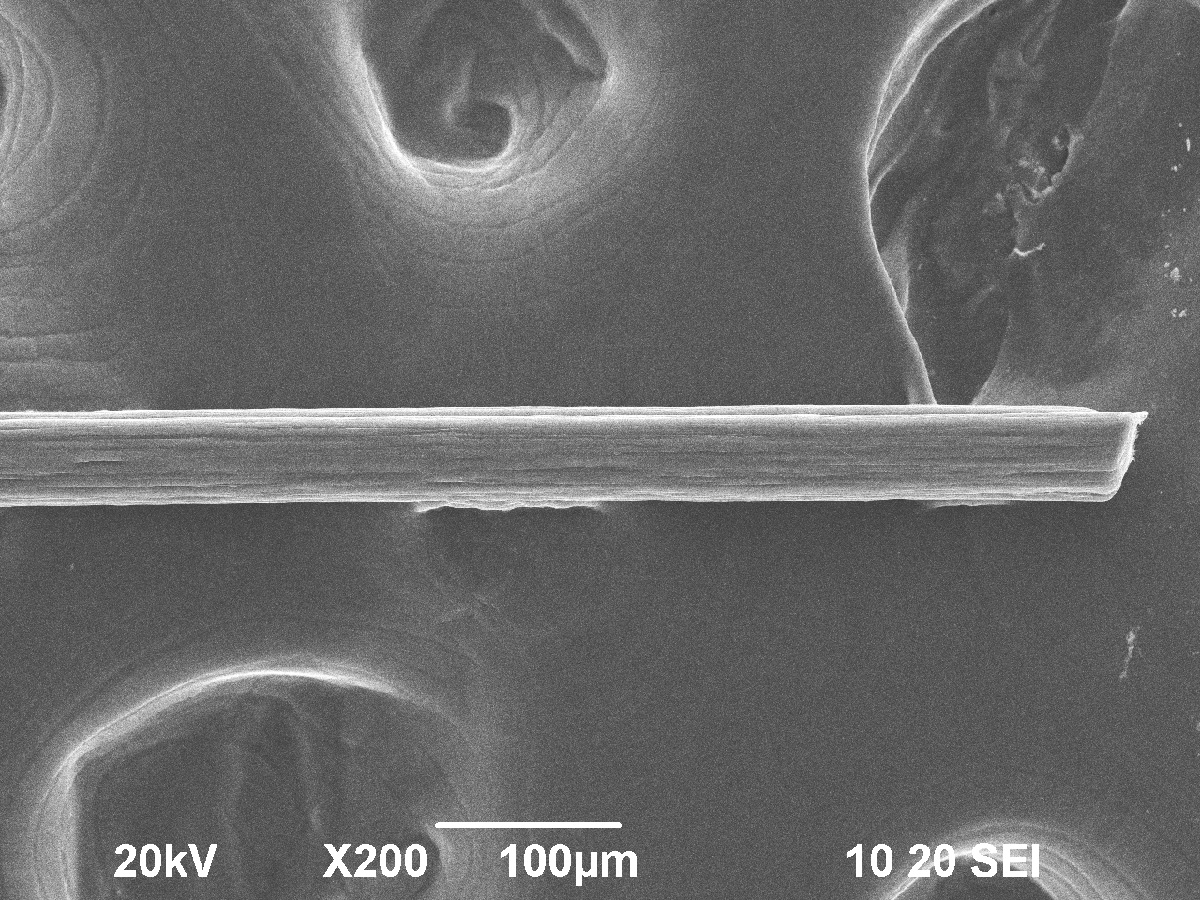
Before Tip Processing
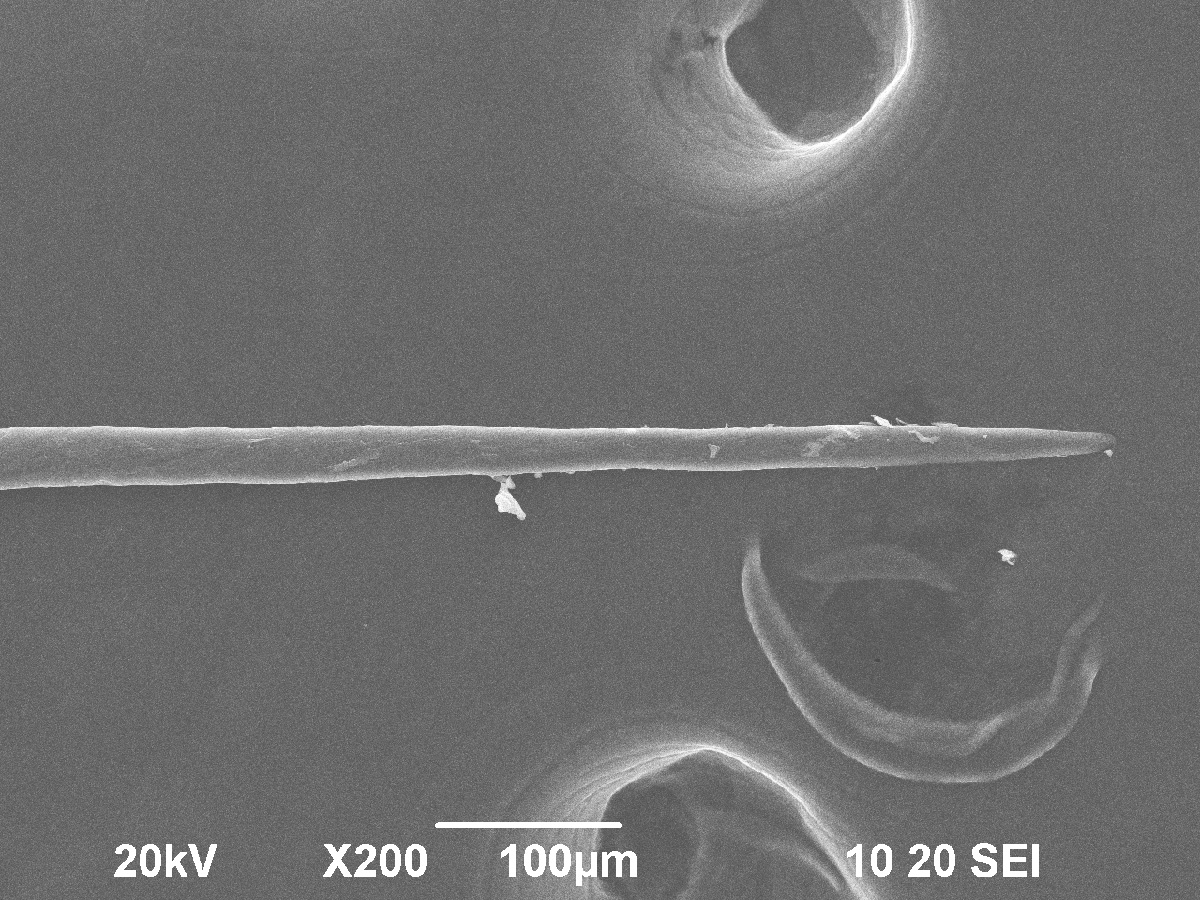
After Tip Processing
×1000 Magnification
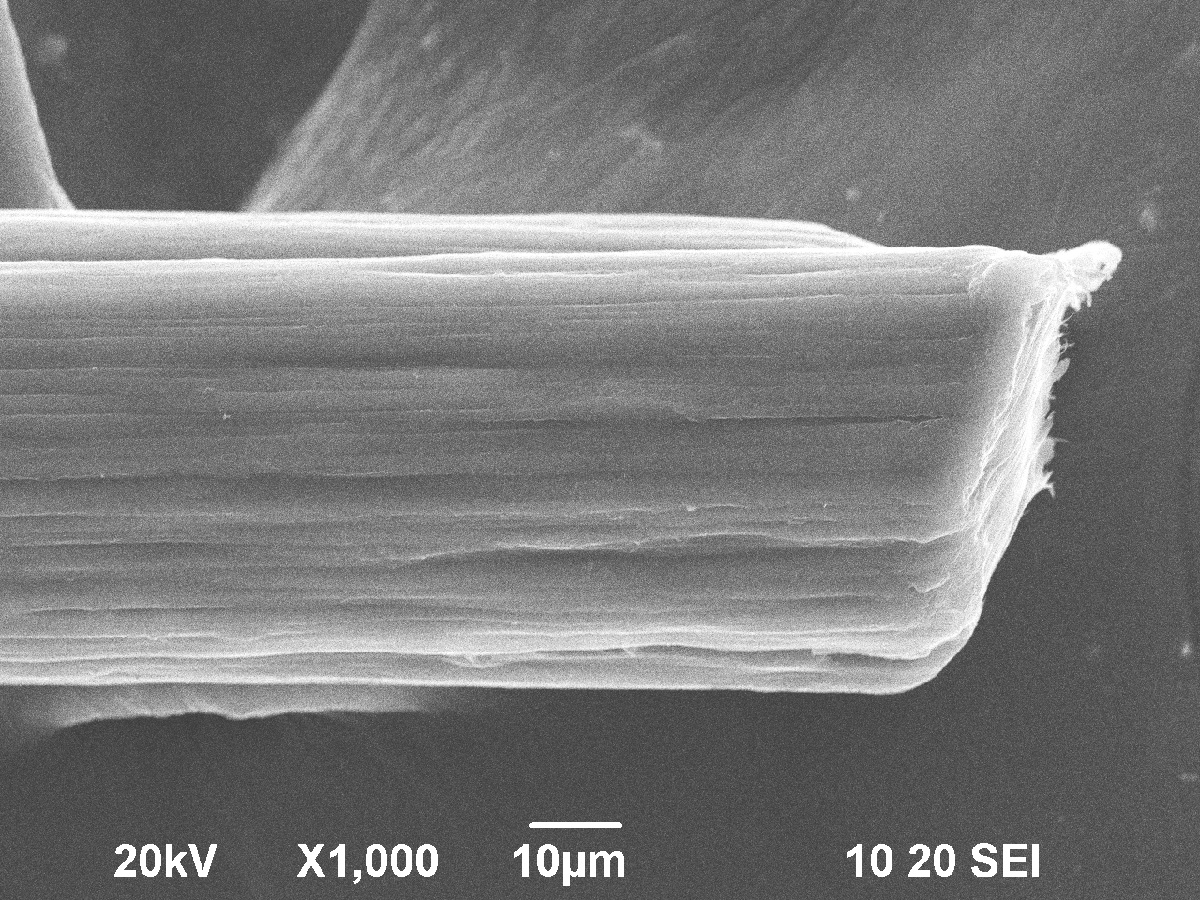
Before Tip Processing
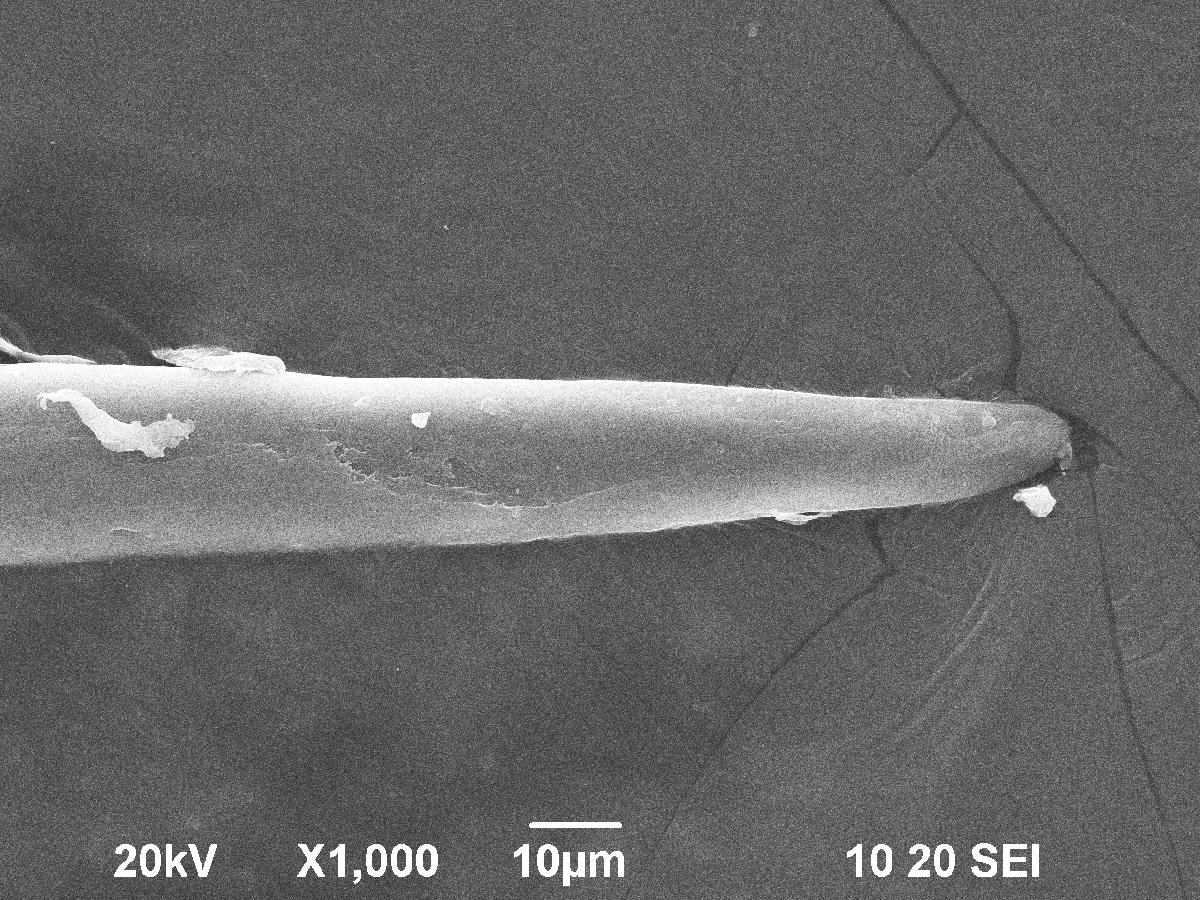
After Tip Processing
It's said that his brushes remove microscopic dirt more effectively than nylon or PBT brushes. Tips tapered through chemical dissolution tend to have a smoother, more slippery surface — which, in fact, makes them less effective at drawing out dirt. This is why people often say washing with a nylon or PBT brush "doesn't feel like it's really cleaning."
His brushes, by contrast, achieve their tapered tips through physical honing, leaving a surface that resembles wood freshly planed with a hand plane — smooth, yet never too slippery, striking a delicate balance. This is the secret behind the seemingly paradoxical technique: a touch soft enough to feel gentle on skin, yet still able to draw out dirt.
He achieved this microscopic tip-honing process using a machine he himself had built. Operating that machine was no simple task — it required subtle adjustments depending on the weather each day — but with enough skill, the process could be carried out by other trained craftsmen. In fact, after his own retirement from daily work, this honing process was carried on by skilled artisans he had trained. What only he could do, however, was maintain and repair the machine itself. The delicate technique behind it was something only he had ever created.
And in February 2025, he passed away — leading, in July of that same year, to the complete end of production.
To everyone who has cherished this brush over the years, we are sorry to share this news, and wanted to explain the circumstances that led to the end of production.
Please also see the Message.